


How to play
Think of this as four-dimensional Noughts and Crosses with Time being the 4th dimension.
Getting ready
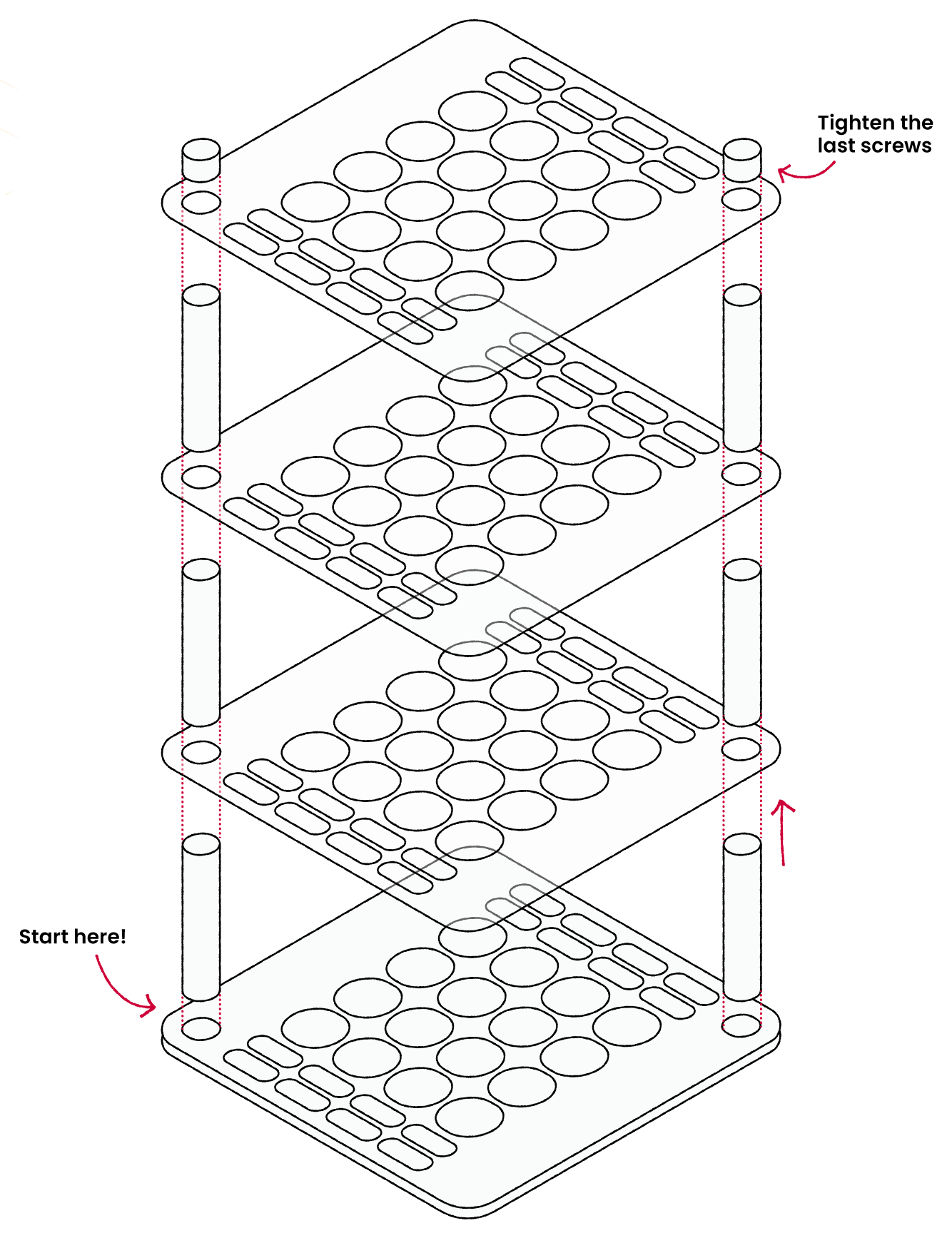
Set up the four-layered board.
Players choose X or O.
Create two stacks, one with even, the other with the odd numbered Time Tiles.
The odd numbers have the advantage, so the player who won most recently or the youngest player goes first.
Take turns placing one piece (X or O) per turn after drawing one Time Tile from your stack.
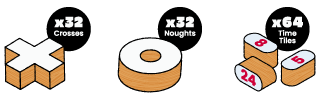
Time Tiles (TT)
Each turn uses one Time Tile, numbered from 1 (most powerful) to 64 (least powerful).
Players draw one Time Tile per turn.
A Time Tile determines the rank of the related piece.
Lower numbers always outrank higher numbers.
The smaller number beats the larger number – until something smaller comes along.
Taking a turn
Draw a Time Tile.
Place your piece on the board (white side up).
Place the Time Tile in the matching slot on the side of the board, aligned with that position.
Removing pieces (Takeovers)
A piece can be removed if its Time Tile number is higher than the Time Tile just played.
Examples:
TT1 can remove any piece.
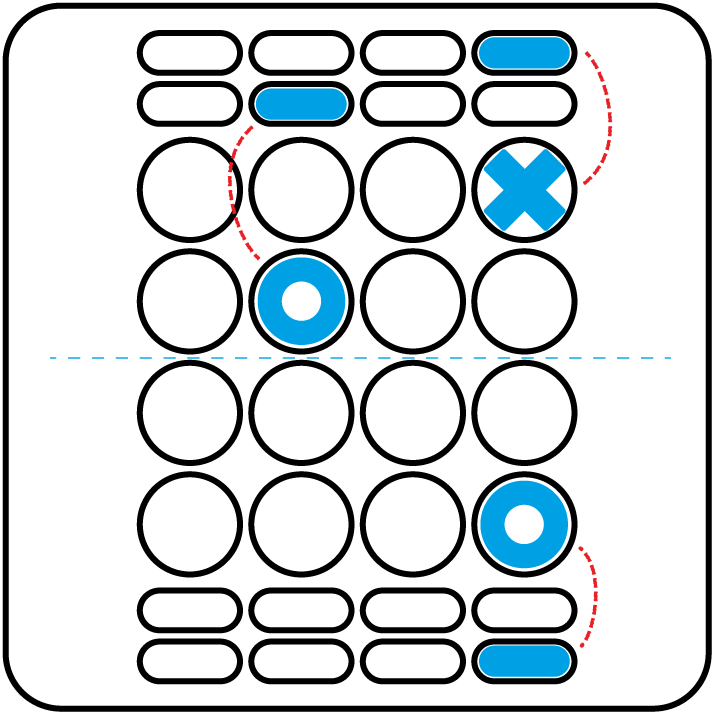
TT8 can remove TT12.
TT64 cannot remove anything.
Players may remove:
Their opponent’s pieces, if it benefits them.
Their own piece, if it benefits them.
Removed pieces and their Time Tiles are placed to the side.
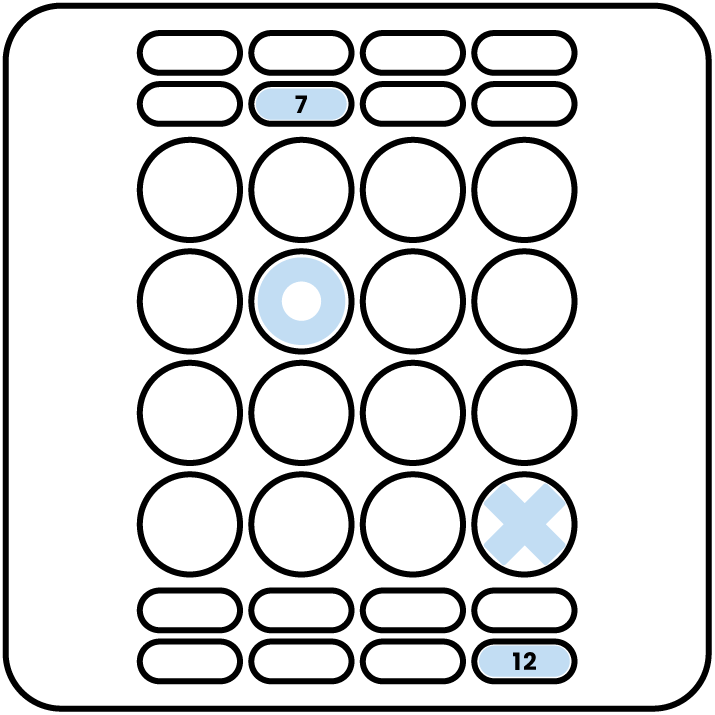
The outer TT slots relate to the outer round piece slots, and the inner TT slots relate to the inner round piece slots.
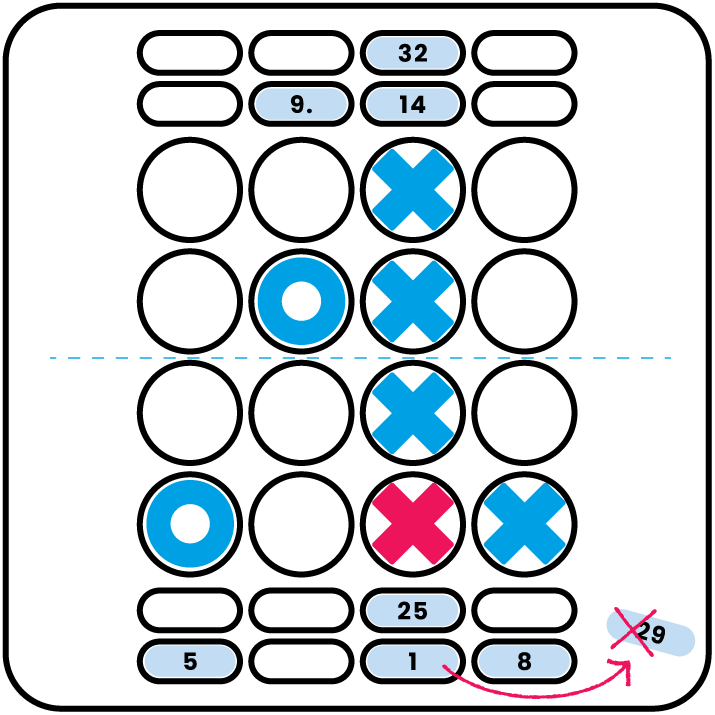
TT8 removes TT12 and the player removes the opponent’s piece (nought) and replaces it with theirs (cross).
Secured pieces
Turn your pieces from white to red to secure them.
A piece cannot be removed once it is turned over to the red side.To win, form an uninterrupted row of four red pieces in any direction, including diagonal and through the depth of the board.
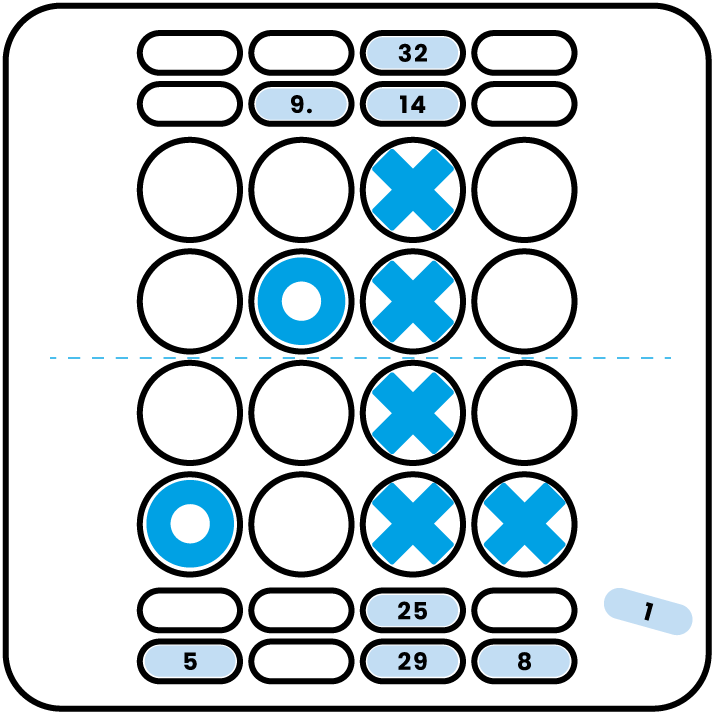
When a player draws TT1, it can remove any TT in the game and secure their piece by switching it to red.
Returning pieces
Once all Time Tiles lower than a removed Tile have been played:
A Piece corresponding to that TT is returned to the board.
This can happen outside a player’s turn
It may feel like one player is acting multiple times in a row but they aren’t – time is just catching up.
Cascades
The sequence of multiple pieces being turned to their red side, replaced and removing other pieces from the board, all while few or no additional turns have occurred, is referred to as a Cascade
Cascades are part of the game. Plan for them. Or be caught by them.
Player 1 played TT1 in the previous move.
Player 2 must switch their TT2 piece to red.
TT3 had previously been removed and is automatically played. In returning this piece to the board, Player 1 knocks TT25 off the board.
TT4 may or may not be drawn next, but when Player 2 eventually plays TT4, another cascade starts. This is because TT5 and TT6 are already on the board and will be turned to red.
Note that Player 2 may choose to use TT4 to knock TT5, TT6 or any higher-numbered Time Tile off the board.
Winning the game
You win when you have four red pieces in a row.
Draw – nobody wins
If all 64 turns are completed without a winner, the game is a draw.